Case Study
Wilms: MES in Ignition for a high-mix production environment
Wilms combines product innovation with a strong production culture. To support a complex manufacturing environment, they use Ignition to create more structure, visibility, and digital control on the production floor.
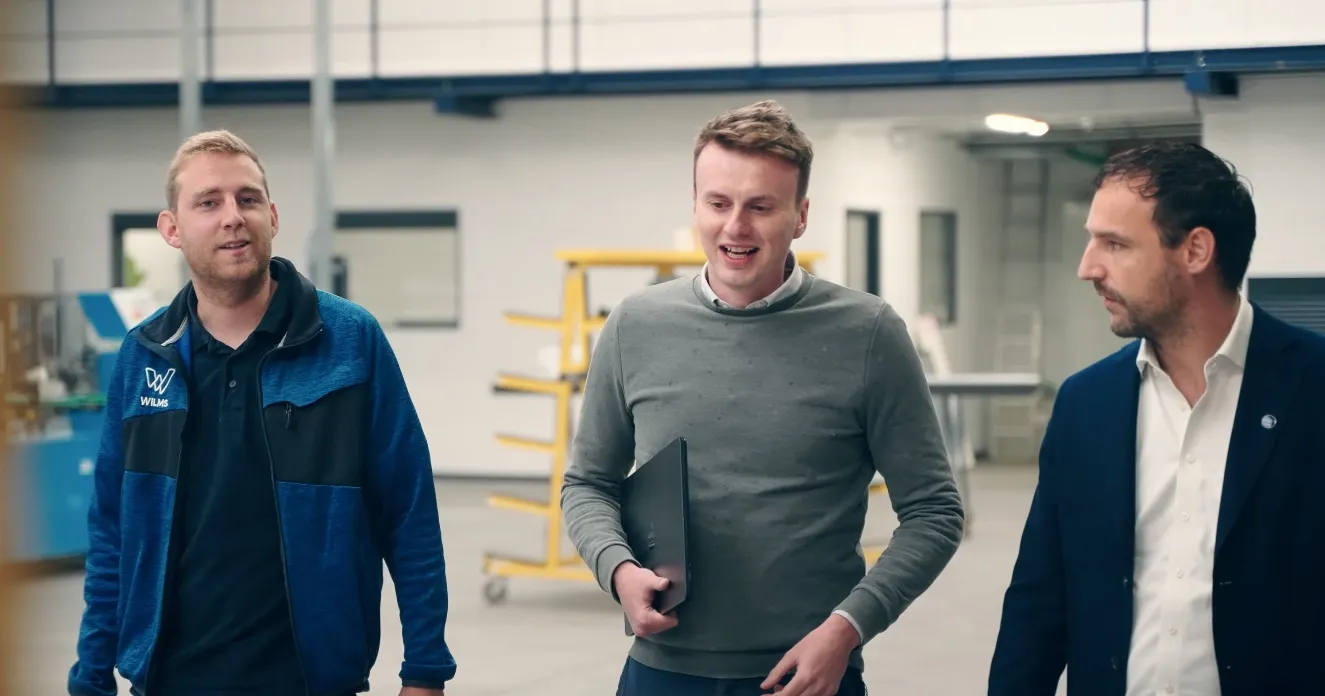
“Mustry has played an important role in our project by, on the one hand, engaging with the business and carrying out strong business analysis, and on the other hand, working together with our software developers to implement Ignition in practice.”
Yannick Philippaerts – IT Manager
Scope
The challenge
Wilms is a growing manufacturing company producing shutters, screens, and ventilation systems. Those products involve many variants, significant manual work, and a large number of parallel production steps across the shop floor.
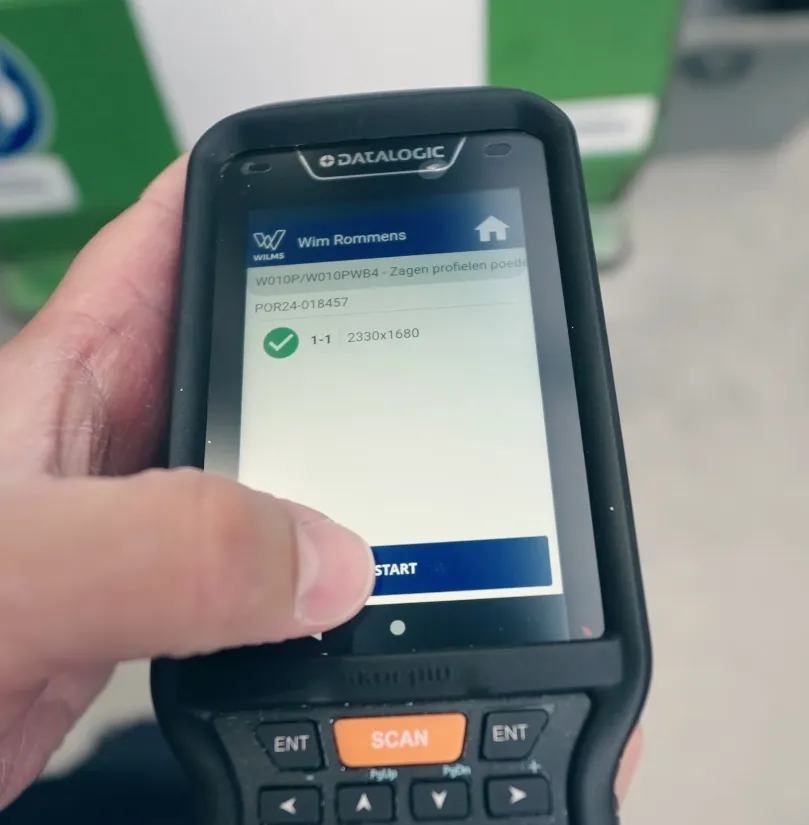
As order volume increased, coordinating a few hundred production orders per day became increasingly difficult. The ERP system was carrying too much of the operational logic and had become a fragile backbone for production follow-up. Aging scanners were becoming unreliable and causing daily frustration on the shop floor.
At the same time, team leaders lacked clear real-time visibility into production progress, bottlenecks, and exceptions. The result was a production environment held together by workarounds, tribal knowledge, and limited digital support for a process that had already outgrown the structure of the existing system landscape.
What we built
Together with Wilms, we helped shape a production-oriented MES layer in Ignition that captures shop-floor knowledge and translates it into a more usable digital workflow.
The solution focused on making production movements easier and more reliable to register, improving visibility for planning and follow-up, and creating a stronger operational bridge between people, systems, and machines.
This included new scanning flows, clearer production dashboards, and tighter alignment between production execution and surrounding systems such as ERP, WMS, and machine integrations. A key part of the project was not just implementing software, but understanding the production process in detail and converting that knowledge into a practical system that supports operators, team leaders, IT, and software developers at the same time.
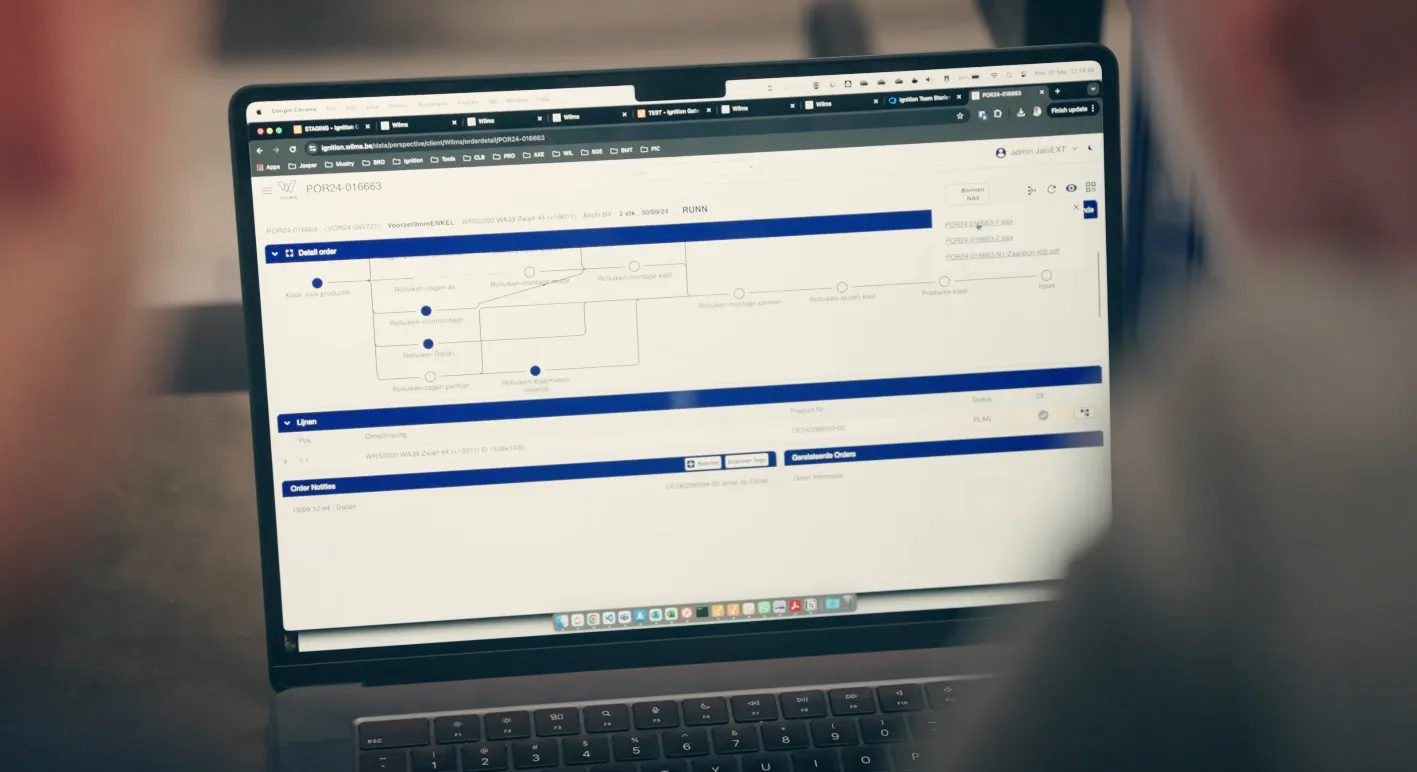
Planning and visibility on the floor
Outcome
Wilms now has a clearer digital structure on the production floor. Planning and follow-up can be reviewed at a glance, which helps teams identify where extra attention is needed and act faster when issues arise.
The new tooling reduced friction for operators by replacing outdated scanners and improving the usability of day-to-day production interactions. It also helped Wilms capture critical operational knowledge that previously lived mainly in people's heads, reducing dependency on informal workarounds and making production execution more robust as the company grows.
The project also created a stronger foundation for future improvements, including more paperless workflows, more dynamic planning, and deeper machine integrations to further improve quality and delivery reliability.
"The collaboration is very easy for us because we can give feedback quickly, and adjustments are made rapidly. With each update, we end up with an even more user-friendly product for us."
Brent Convens, Production Team Lead
Working together on the rollout
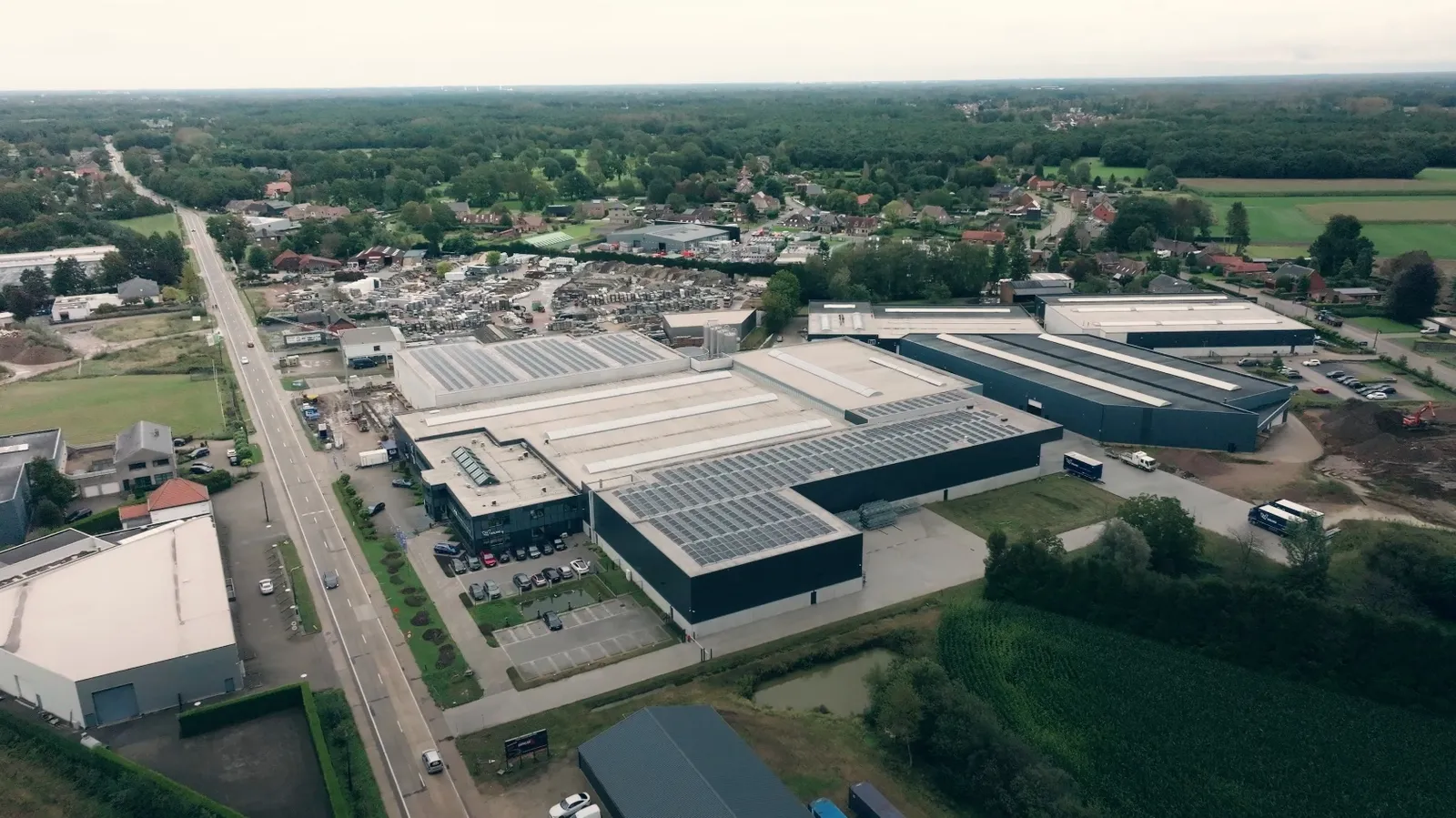
The project combined shop-floor understanding, business analysis, and hands-on implementation with Wilms teams.